TaliDash
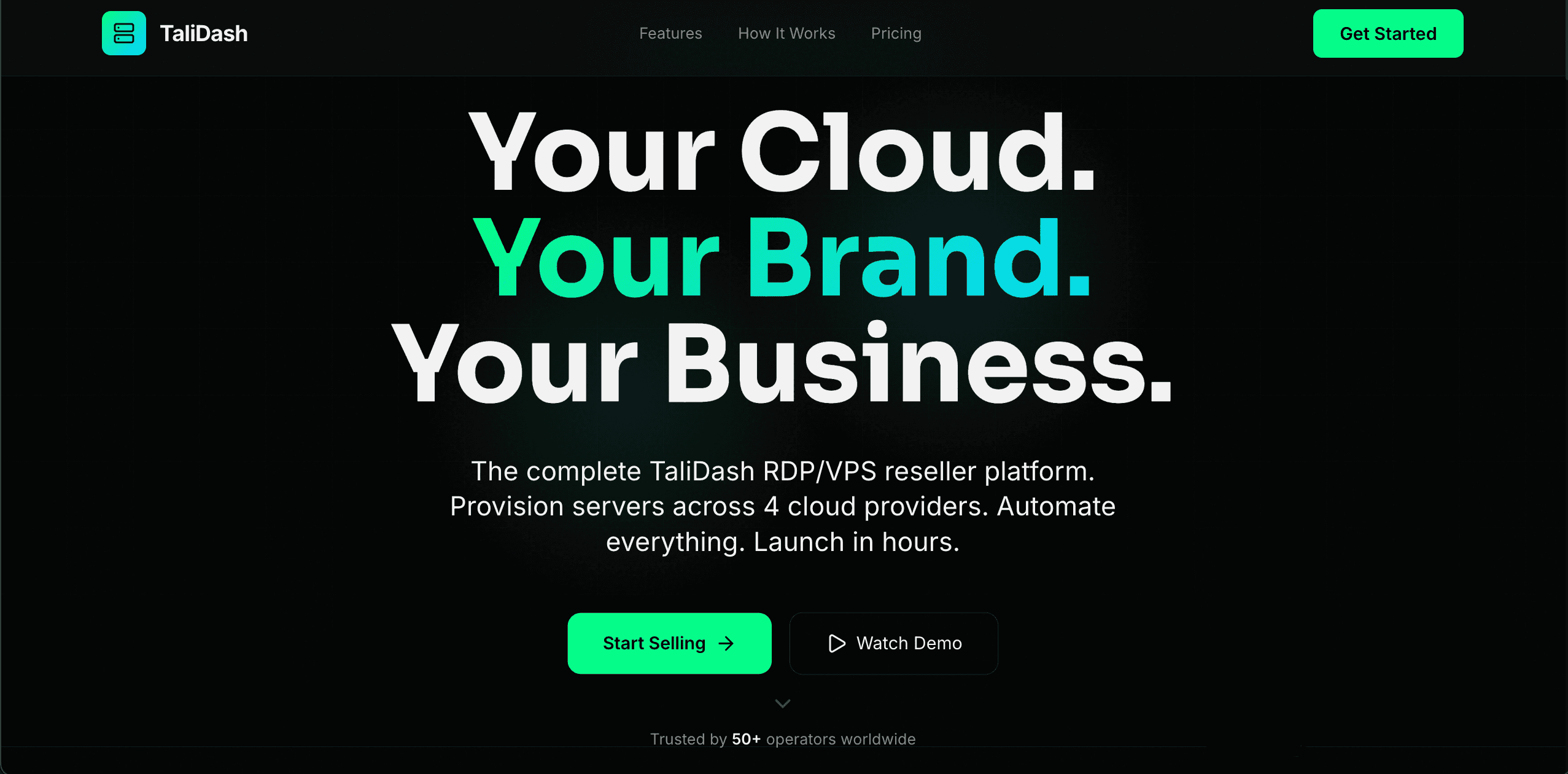
A reseller operations platform that centralizes server provisioning, billing, and lifecycle management into one system instead of a pile of manual steps.
Why this project mattered.
TaliDash serves an operations-heavy environment where speed and repeatability matter more than surface polish alone.
The product had to support providers, customers, and internal management in one connected workflow.
This project mattered because manual provisioning and fragmented billing processes create expensive operational drag.
What was not working.
Provisioning across multiple cloud providers is slow when handled manually.
Billing, support, and server lifecycle logic can drift apart when they live in separate tools.
Operational complexity compounds fast as customer count and infrastructure footprint grow.
What success needed to mean.
Reduce manual workload around server provisioning and lifecycle management.
Create one place for infrastructure, billing, and customer operations.
Improve visibility across providers and account activity.
Set up a platform that can scale without scaling chaos.
What we built.
The solution had to be practical, usable, and aligned with the real business pressure behind the project.
Centralized reseller dashboard
We brought provisioning, account actions, and platform oversight into one operating surface.
Cloud-provider workflow integration
The system was shaped to work across multiple infrastructure vendors without making the operator think in separate tools.
Lifecycle and billing support
The platform logic was designed around the full customer lifecycle, not just initial server creation.
How the work moved.
A stronger outcome comes from a stronger process, not from improvising the whole thing in code.
Discovery
Mapped the manual pain points in reseller operations and server management.
UX / flow design
Designed around operator speed, visibility, and low-friction repeated tasks.
Build
Implemented a SaaS platform with infrastructure-oriented workflows and service logic.
Testing
Checked task clarity, provider flow consistency, and dashboard usability.
Launch
Delivered a stronger control center for reseller operations.
Iteration
Prepared the product for deeper automation and support workflows.
What changed after.
Where exact numbers were not available or public, the case study uses directional outcomes grounded in the product and business context.
Core workflows now belong to one system instead of disconnected handling.
The platform reduces repeat work and standardizes key actions.
The dashboard creates a better overview of service and customer activity.
What we chose on purpose.
Designed around operators, not generic SaaS patterns
This product needed speed and command more than marketing-style softness.
Unified vendor complexity behind one interface
Operators should think in outcomes, not in which provider panel to open next.
Did not front-load every advanced support feature
We focused first on the spine of the business: provisioning, management, and visibility.
What we would improve next.
Expand automation around renewals, incidents, and customer communications.
Add richer reporting for reseller performance and support load.
Deepen provider abstraction so scaling does not multiply complexity.
Need to turn messy operations into one usable system?
We build internal and client-facing platforms that reduce manual drag and give teams better control.